October 11, 2013
Every once in a while, it is worth reflecting on concepts that have become so central to discourse that they are repeated ad nauseum but without any novelty. So it goes with ‘interdisciplinarity’, a pet term of any university or research administrator. It is widely desired or required, without much thinking about what it means. For there can be multiple interdisciplinarities, or competing interdisciplinary approaches (as I show for political ecology and resilience, see below). Interdisciplinarity can be a practice, a goal, a tool, or an outcome; it can be individual or team-based; it can be ‘deep’ or ‘shallow’; it can be a spirit of enquiry or a formal requirement.
These were some of the inspirations I gained from attending, this first week of October, an intimate conference on Interdisciplinarités entre natures et sociétés, in Cerisy-la-Salle, France. Read the rest of this entry »
 1 Comment |
  Political ecology, Research | Tagged: conference, disciplinary boundaries, Interdisciplinarity, political ecology |
  Permalink
 Posted by christiankull
September 25, 2013
The team of our current ARC-funded project on local knowledge and uses of environmental weeds recently assembled in Kununurra, far northwest Australia. The project will compare local people’s views of “weeds” across four case studies in four countries around the Indian Ocean – India, South Africa, Madagascar, and Australia. My Monash colleague Priya Rangan and I are collaborating with Charlie Shackleton (Rhodes University, South Africa) and Ramesh Kannan (ATREE, India), supported by Tom Bach (doctoral student on our previous ARC grant) and Pat Lowe (Kimberley-based author and environmentalist). Read the rest of this entry »
1 Comment | Acacia, Conservation, Introduced and Invasive Plants, Political ecology, Research | Tagged: research, weeds | Permalink
Posted by christiankull
September 10, 2013
How did forty years of rural development, population growth, and conservation action transform the landscapes of highland Madagascar? My recently published [1, 2] analysis of a region-wide sample of air photos from circa 1950 and 1991 document several key trends: crop fields, settlements, and exotic trees are replacing open grassland, while irrigated rice is expanding at the expense of wetland and riparian vegetation.
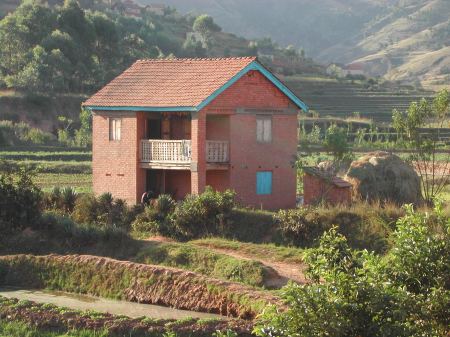
Farmhouse among the intensively cultivated rice terraces of Betafo, west of Antsirabe
Read the rest of this entry »
2 Comments | Development, Madagascar, Political ecology, Research, Smallholder farming | Tagged: aerial photography, afforestation, agrarian change, agricultural development, land use change, Madagascar | Permalink
Posted by christiankull
August 31, 2013
Indonesia‘s courts recently recognised community forests (or customary ‘adat‘ forests) as distinct from state forests (i.e., government land). This is a landmark decision, as shown in an excellent analysis by Elizabeth Kahurani [1]. It overturns a presumption that the state is first and foremost the guardian and manager of forests, and vests more rights in local communities. In the context of south-east Asia, where states have a poor history of protecting forests (especially in ways that respect local indigenous people), this is an important victory. In contrast, here in Fiji and in much of the rest of the Pacific, the situation is quite different: most land (and hence forest) is ‘native land’ and belongs to traditional village structures. Revenue from logging goes to the iTaukei land board and the villages (the forest service just overseas licences), also two state owned companies grow pine and mahogany on leased native and crown land [2]. In Madagascar, the situation is different again. The presumption of unoccupied land (hence, forests) as state domain comes first, and most significant areas of forestland have been demarcated as parks, reserves, or classified forests. Since the mid-1990s, neighbouring communities may gain use and management rights to some forest areas, but the forest is still fundamentally the state’s [3]. Rural social movements are much weaker than in Indonesia, and the conservation lobby (which usually tends to favour state control) is stronger, in relative terms.
Indonesia’s decision can be read through the Nancy Peluso and Peter Vandergeest’s ideas about “political forests”. Their article in Journal of Asian Studies [4] traces the history of the idea of state forests, and how it was constituted dialectically with customary rights: Read the rest of this entry »
Leave a Comment » | Conservation, Development, Fiji, Madagascar, Political ecology | Tagged: community forests, Fiji, forestry, Indonesia, land tenure, Madagascar, state forests | Permalink
Posted by christiankull
January 8, 2013
Who controls Madagascar’s flora, fauna, and landscapes? How, and for whom, are its forests, grasslands, and waters governed? Over the past three decades, Madagascar’s local environments have become more and more internationalized – subjected to western worldviews and gazetted into protected areas with foreign funding.
Read the rest of this entry »
3 Comments | Book Review, Development, Madagascar, Political ecology, Research | Tagged: conservation, environment, geopolitics, Madagascar | Permalink
Posted by christiankull
December 12, 2012
Are Australian acacias planted overseas miracle plants for rural development, or are they the worst kind of environmental weeds? The battle lines appear rather stark at times. At least when one reads environmentalist Tim Low’s rebuttal to a critique that Jacques Tassin and I wrote of his views. We thought our statement to be tempered and tried to build a reasonable case for responsible use of exotic agroforestry trees (see also previous blog). But Low calls us “in denial about dangerous aid”, flogs a misplaced example about mesquite in an argument about acacia, all the time preaching his argument to the converted in the journal Biological Invasions. Read the rest of this entry »
2 Comments | Acacia, Development, Introduced and Invasive Plants, Political ecology, Research, Sustainability, Vietnam | Tagged: Acacia, development aid, environment, forestry, invasive alien species, miracle trees, Vietnam | Permalink
Posted by christiankull
August 7, 2012
The landscapes that characterize different places on the earth, and from which many people earn their livelihoods and their sense of place, and which support diverse flora and fauna, are often built with a mix of local and introduced plants. Sometimes, introduced plants succeed so wildly in their new home that people come to see them as weeds or pests, crowding out crops or native species, changing soil conditions, altering fire regimes, or affecting the water table. The field of invasion biology emerged over the past few decades seeking to document, understand, and stop such “alien invasions”. But the fervour of this effort has at times crashed head-on with alternative worldviews. One of South Africa’s top weeds, for example, is the Australian native silver wattle, also naturalized in France where it is celebrated for its winter flowers and as an ingredient for Chanel No. 5 and other perfumes [1][2]. Such conflicting outlooks were on stark display at a workshop I attended in October 2010 at Stellenbosch, South Africa, on Australian acacias as a global experiment in biogeography.
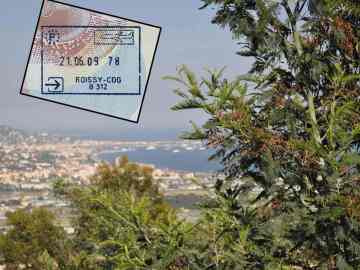
Picture 1: Do plants need passports? Who should control plant movements, and on what basis? Silver wattle (Acacia dealbata), native to Australia, invasive and assimilated as mimosa in the Côte d’Azur, France.
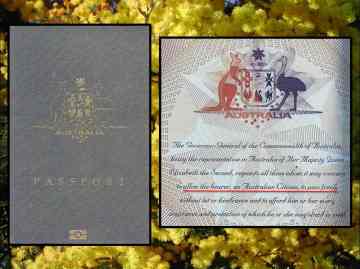
Picture 2: Do Australian acacias need passports? Australian passports specify “free passage without let or hindrance”…
Read the rest of this entry »
3 Comments | Acacia, Introduced and Invasive Plants, Political ecology, Research | Tagged: australian acacias, control, environment, eradication, geographic perspectives, invasion biology, invasive alien plants, landscapes, livelihoods, nature, plant transfers, quarantine, region, sense of place | Permalink
Posted by christiankull
September 8, 2011
Mozambique rarely appears in the worldview of people in Madagascar, despite straddling the same latitudes just across the water from each other. Yet the two countries have much in common, as I discovered on a recent road trip with Priya Rangan to gather botanical samples and stories about baobabs.

A big baobab near the ruins at Sungo, downstream from Tete, Mozambique
Read the rest of this entry »
3 Comments | Development, Madagascar, Political ecology, Research | Permalink
Posted by christiankull
March 30, 2011
Today’s attention-grabbing environmental issues in Madagascar are certainly different than a decade or two ago. At the time, deforestation and biodiversity conservation dominated attention, and social justice researchers worried about how the establishment of new parks and forest-use regulations affected rural communities living off the land. Today, we add to these concerns a burgeoning litany of events representing a globalization of Madagascar’s environment: we read about agricultural ‘land grabs’, booms in gem mining reminiscent of the Wild West, the actions of international mining companies in exploration and major mining projects, land potentially sequestered for biofuels or carbon sequestration, illegal exploitation of tropical hardwoods, and the refocusing of biodiversity conservation towards reducing deforestation carbon emissions via the REDD+ process. Barry Ferguson calls these new trends a ‘natural resource rush’ in his excellent blog posting.
The social justice impacts of these trends are as yet unclear. They can provide benefits, but, given history in Madagascar and elsewhere, they have the potential to be problematic: farmers losing access to ancestral land, farmers unwillingly moved into low-paid wage labour, social divisions exacerbated by elite capture of the benefits of foreign projects. What surprises me is the apparent lack of rural social movements in a position to contest, shape, and negotiate with such trends, projects, and events. Read the rest of this entry »
4 Comments | Development, Madagascar, Political ecology, Research | Permalink
Posted by christiankull





 Christian Kull