Recently, several geography programs I am familiar with – notably my own at Monash – have been in the throes of administrative reshuffling and identity crises. In written submissions, hallway chats, and meeting room polemics we have all declared, at one point or another, that the strength of Geography is its interdisciplinarity, its crossing of bridges between the natural and the social, between science and arts. We have also declared that the integrity of the discipline depends on it staying together as one, even though a climate modeller will have different needs than an analyst of urban indigenous social movements. Read the rest of this entry »
A space for interdisciplinarity
March 31, 2014
 2 Comments |
  Interdisciplinarity, Sustainability, Teaching | Tagged: environmental studies, interdisciplinary interaction, sustainability |
  Permalink
 Posted by christiankull
Vegetation fire and cultural landscapes in Fiji
March 8, 2014There are three main types of fire in Fiji. Sugar cane farmers burn their fields to facilitate hand harvesting. Village farmers clear forest plots, fallow fields, and secondary vegetation for diverse crops using fire. And finally, the fires that cover the most ground are those set in the grasslands of the drier, lee-side of the islands. And of course there are occasionally fires that cause trouble – late last year I saw a major fire burning through the pine plantations in southeastern Viti Levu.
-
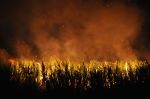
- Sugar cane burns at night south of Nadi, Fiji
-
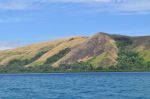
- Fire scar from grassland fire, southeastern tip of Vanua Levu, Fiji
-
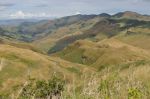
- Uplands in the centre of Viti Levu (Fiji): a pyrocultural landscape
-

- A grassy hill burns at dusk on village land, southeastern tip of Vanua Levu, Fiji
-

- Farmer heading to his fields with fire stick, Tailevu, Viti Levu
-
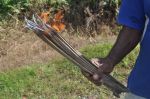
- Close up of fire stick
Leave a Comment » | Fiji, Fire, Research | Tagged: Fiji, fire, fire management, grassland | Permalink
Posted by christiankull
Is everything becoming a ‘Science’? Next up: geographical science, poverty reduction science…
November 25, 2013Is everything becoming a ‘Science’ these days? Land change science, sustainability science, conservation science, invasion science… what is behind all these new labels? This phenomenon seems to have somewhat contradictory drivers: one is an appeal to interdisciplinarity and crossing the natural-social divide; the other is a rhetorical or strategic retreat to the authority of Science-with-a-capital-S. The consequence is a number of approaches claiming intellectual territory and scientific, ‘apolitical’ authority and largely shutting the doors for reflective, interpretive, and critical social science and humanities approaches. Read the rest of this entry »
2 Comments | Research, Sustainability | Tagged: conservation science, sustainability science | Permalink
Posted by christiankull
Competing interdisciplinarities: report from Cerisy
October 11, 2013Every once in a while, it is worth reflecting on concepts that have become so central to discourse that they are repeated ad nauseum but without any novelty. So it goes with ‘interdisciplinarity’, a pet term of any university or research administrator. It is widely desired or required, without much thinking about what it means. For there can be multiple interdisciplinarities, or competing interdisciplinary approaches (as I show for political ecology and resilience, see below). Interdisciplinarity can be a practice, a goal, a tool, or an outcome; it can be individual or team-based; it can be ‘deep’ or ‘shallow’; it can be a spirit of enquiry or a formal requirement.
These were some of the inspirations I gained from attending, this first week of October, an intimate conference on Interdisciplinarités entre natures et sociétés, in Cerisy-la-Salle, France. Read the rest of this entry »
1 Comment | Political ecology, Research | Tagged: conference, disciplinary boundaries, Interdisciplinarity, political ecology | Permalink
Posted by christiankull
Field trip: indigenous perspectives on weeds in the Kimberley
September 25, 2013The team of our current ARC-funded project on local knowledge and uses of environmental weeds recently assembled in Kununurra, far northwest Australia. The project will compare local people’s views of “weeds” across four case studies in four countries around the Indian Ocean – India, South Africa, Madagascar, and Australia. My Monash colleague Priya Rangan and I are collaborating with Charlie Shackleton (Rhodes University, South Africa) and Ramesh Kannan (ATREE, India), supported by Tom Bach (doctoral student on our previous ARC grant) and Pat Lowe (Kimberley-based author and environmentalist). Read the rest of this entry »
1 Comment | Acacia, Conservation, Introduced and Invasive Plants, Political ecology, Research | Tagged: research, weeds | Permalink
Posted by christiankull
Rural development and landscape transformations in highland Madagascar
September 10, 2013How did forty years of rural development, population growth, and conservation action transform the landscapes of highland Madagascar? My recently published [1, 2] analysis of a region-wide sample of air photos from circa 1950 and 1991 document several key trends: crop fields, settlements, and exotic trees are replacing open grassland, while irrigated rice is expanding at the expense of wetland and riparian vegetation.

Farmhouse among the intensively cultivated rice terraces of Betafo, west of Antsirabe
2 Comments | Development, Madagascar, Political ecology, Research, Smallholder farming | Tagged: aerial photography, afforestation, agrarian change, agricultural development, land use change, Madagascar | Permalink
Posted by christiankull
Recognising community rights in ‘political forests’
August 31, 2013Indonesia‘s courts recently recognised community forests (or customary ‘adat‘ forests) as distinct from state forests (i.e., government land). This is a landmark decision, as shown in an excellent analysis by Elizabeth Kahurani [1]. It overturns a presumption that the state is first and foremost the guardian and manager of forests, and vests more rights in local communities. In the context of south-east Asia, where states have a poor history of protecting forests (especially in ways that respect local indigenous people), this is an important victory. In contrast, here in Fiji and in much of the rest of the Pacific, the situation is quite different: most land (and hence forest) is ‘native land’ and belongs to traditional village structures. Revenue from logging goes to the iTaukei land board and the villages (the forest service just overseas licences), also two state owned companies grow pine and mahogany on leased native and crown land [2]. In Madagascar, the situation is different again. The presumption of unoccupied land (hence, forests) as state domain comes first, and most significant areas of forestland have been demarcated as parks, reserves, or classified forests. Since the mid-1990s, neighbouring communities may gain use and management rights to some forest areas, but the forest is still fundamentally the state’s [3]. Rural social movements are much weaker than in Indonesia, and the conservation lobby (which usually tends to favour state control) is stronger, in relative terms.
Indonesia’s decision can be read through the Nancy Peluso and Peter Vandergeest’s ideas about “political forests”. Their article in Journal of Asian Studies [4] traces the history of the idea of state forests, and how it was constituted dialectically with customary rights: Read the rest of this entry »
Leave a Comment » | Conservation, Development, Fiji, Madagascar, Political ecology | Tagged: community forests, Fiji, forestry, Indonesia, land tenure, Madagascar, state forests | Permalink
Posted by christiankull
Pyric phases in Madagascar’s longer-than-presumed prehistory
August 7, 2013An exciting archaeological find by Bob Dewar [1] and colleagues suggests the presence of hunter-gatherers on Madagascar around 4000 years ago, which essentially doubles the length of the history of Madagascar’s human settlement. Their discovery, published in PNAS [2], suggests four thousand years of people living, burning, cultivating, shaping, transforming, and developing the island’s environment, instead of around two thousand [3]. From a pyrogeography perspective, Dewar and colleagues make an important point towards the end of their paper: Read the rest of this entry »
1 Comment | Fire, Madagascar, Research | Tagged: archaeology, environmental history, fire, fire regimes, Madagascar, pyrogeography | Permalink
Posted by christiankull
Sustainability and school choice
July 11, 2013Imagine two 9 year-old children. One gets driven across town to a school that his parents find best fits his learning needs, or social values, or cultural community. He barely knows the kids on the street where he lives, as they all go to other schools. He sits in traffic everyday, contributing carbon to the atmosphere and pollutants to the city air. The other child walks to the local primary school, joining friends along the way, kicking stones down the sidewalk, plucking leaves from the hedge, learning to avoid dangerous street crossings and engaging in little mischiefs. Obviously, I exaggerate and simplify. But the point I wish to make is that the impacts of school choice (or school vouchers, or proliferating private schools) on traffic, air quality, carbon emissions, health, family time, and neighbourhood cohesion are far from sufficiently discussed in debates over school choice.
2 Comments | Schools, Sustainability | Tagged: carbon emissions, school choice debate, sustainability | Permalink
Posted by christiankull
Disaster risk reduction: a decade of global effort comes home
May 10, 2013As the international development community gears up to renew a global plan for improved ‘disaster risk reduction’ from 2015 (the ‘post-Hyogo’ framework), it is striking to reflect on how central the idea of disaster risk reduction has become in the development industry. Boosted in no small measure by attention to the 2004 Indian Ocean tsunami, and in tandem with efforts at climate change adaptation, disaster risk reduction has been a dominant theme over the past decade. In my own world, it appears everywhere I look
Leave a Comment » | Development, Teaching | Tagged: Disaster risk reduction | Permalink
Posted by christiankull

 Christian Kull