Why is resource tenure important for forest restoration and tree planting? Tenure security has been correlated with successful restoration. But what does this mean, how does one analyse it, and how does it play out in different contexts? How do questions around resource tenure impact global, national and sub-national restoration initiatives? The Interdisciplinary Expert Panel of our Velux-Stiftung funded project on the governance of tree planting and forest restoration has prepared a Policy Brief to answer these questions.
Read the rest of this entry »The role of land rights, tree rights, and tenure security in successful forest restoration
March 18, 2026
 Leave a Comment » |
  Conservation, Development, Research, Sustainability | Tagged: FLR, forest restoration, tenure, tree planting |
  Permalink
 Posted by christiankull
Knowledge gaps and narrative traps in Madagascar’s environmental history
July 1, 2025
Madagascar’s environmental past is more complex and regionally diverse than the tired narrative of a once-forested island devastated by people would have us believe. In a just-published opinion piece led by one of my academic heroines, Alison Richard, we unpack this oversimplified story, showing how diverse landscapes—from ancient grasslands to dynamic forest mosaics—shifted over millennia, shaped by both natural forces and human action. Yet traces of that older narrative linger stubbornly in scientific debates and conservation strategies. Escaping this narrative trap requires paying closer attention to the deep-time environmental record and to the heterogeneity of human histories across the island.
Read the rest of this entry »
Leave a Comment » | Conservation, Environmental History, Interdisciplinarity, Madagascar, Research | Tagged: archaeology, historical geography, Madagascar, paleoecology | Permalink
Posted by christiankull
The place of people in restoring nature
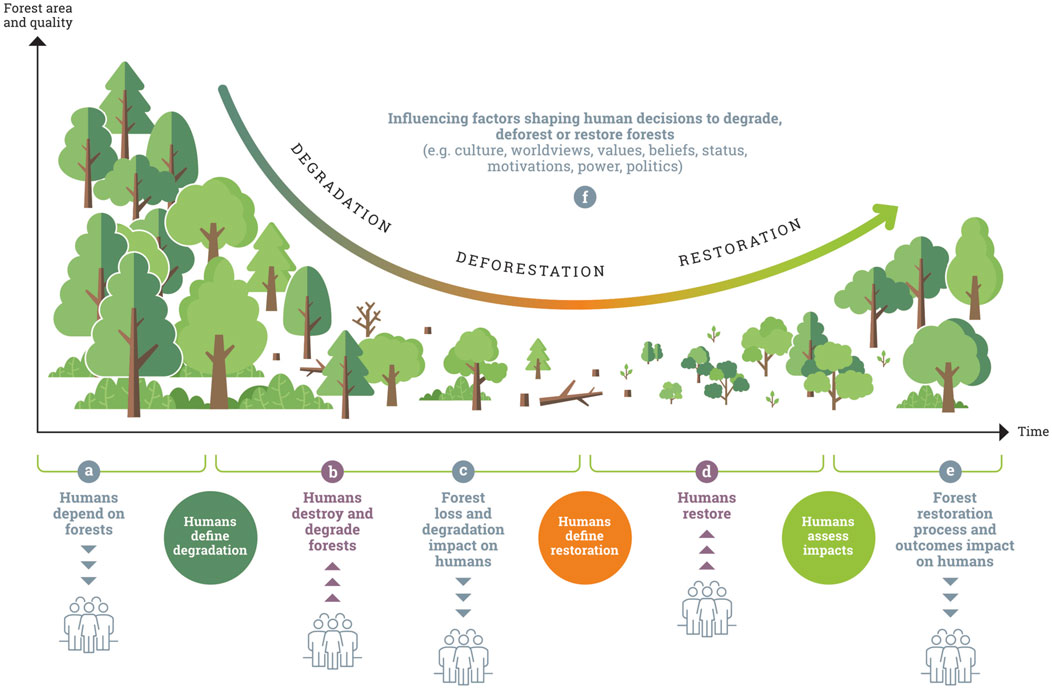
April 14, 2025All too often, efforts to restore forests and ecosystems treat the human dimensions as an afterthought. Biodiversity, or carbon offset payments, tend to come first. Yet ultimately, it is people who shape the need for, take decisions on, carry out, and are impacted by restoration. In a pair of short policy perspective articles led by my colleague Stephanie Mansourian, we outline the importance and relevance of human dimensions. The first one presents a five-pillar framework – stretching across scales from local to global – to help policymakers and practitioners think through the diverse places where a human focus is crucial. The second one uses the forest transition curve to illustrate how people are relevant at every stage of forest loss and potential recovery.
Leave a Comment » | Conservation, Development, Sustainability | Tagged: ecosystem restoration, forest landscape restoration | Permalink
Posted by christiankull
Understanding ‘forest transitions to sustainability’ better by mapping and analysing forest history in detail: case of Thừa Thiên-Huế Province, Vietnam
October 6, 2023
The FT Viet project’s new paper in the journal Land Use Policy is a major contribution both to studies of “forest transitions” (the idea that as places develop over time, forest loss switches to forest regrowth) and to the specific history of forest dynamics in central Vietnam’s Thừa Thiên-Huế province. Led by Roland Cochard, with remote sensing whizzery contributed by Mathieu Gravey and colleagues, this paper is a very rich and careful historical analysis of fifty years of forest change based on remote sensing and documentary sources.
Read the rest of this entry »
Leave a Comment » | Acacia, Conservation, Development, Environmental History, Research, Sustainability, Vietnam | Tagged: forestry, sustainability, Vietnam | Permalink
Posted by christiankull
FT Viet project movie
June 21, 2023The “FTViet” project, which investigated the nature of forest transitions in central Vietnam through research, capacity building, and policy making is in its last year. Here’s a relaxing 15 minute video produced by our wonderful partners at the NGO Corenarm summarising the project. It gives a nice sense of the landscapes and people involved (Subtitles in English).
Leave a Comment » | Acacia, Conservation, Development, Vietnam | Tagged: forest transition, Vietnam | Permalink
Posted by christiankull
Reflecting on the future of Vietnam’s forests
June 16, 2023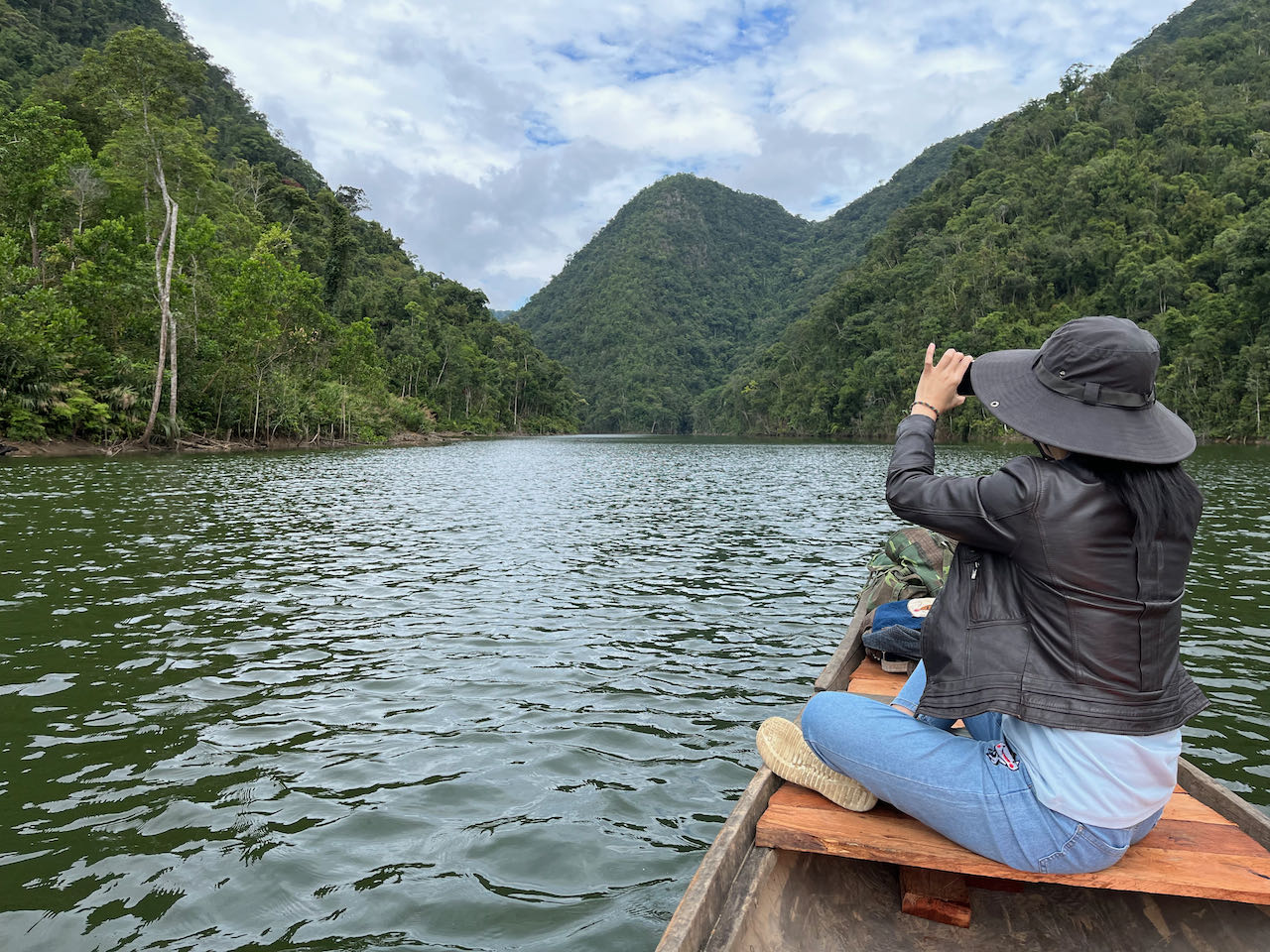
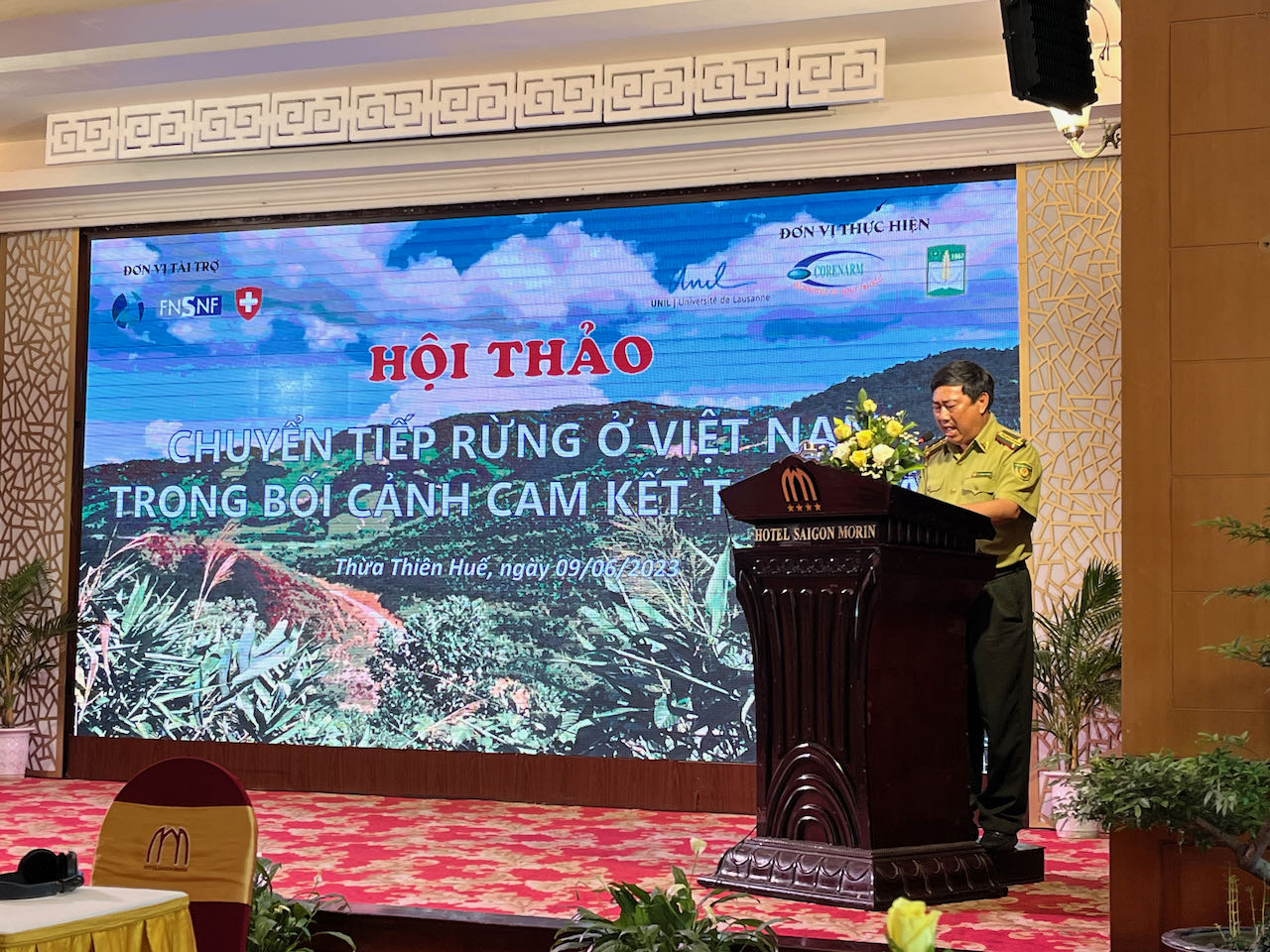
Our FT Viet project recently held a science-policy workshop on forest change and sustainability. After over five years of project activities, it was a chance to report on project outcomes and bring together key actors to reflect on the trends, direction, and sustainability of forest management in Vietnam. The 40+ people assembled in a hotel conference room in Hue on June 9 included people working at the national level in Hanoi, others from Thua Thien Hue and nearby provinces in the north Central region, and local stakeholders. There were university researchers and leaders, officials from the national payments for ecosystem services program, conservationists, leaders of forest certification programs, NGOs, and, of course, state foresters in their green uniforms.
Read the rest of this entry »
1 Comment | Acacia, conference, Conservation, Development, Doctoral students, Research, Vietnam | Tagged: Acacia, forest transition, Vietnam | Permalink
Posted by christiankull
Recognition of community land rights: a tool against tropical deforestation
March 23, 2023Wanting to preserve biodiversity in tropical forest areas without involving the local and indigenous communities that live there is neither fair nor effective, say ecologist Jacques Tassin and geographer Christian Kull. This was the tag line for our recent opinion piece published in the French newspaper Le Monde. Thanks so much to my friend and collaborator Jacques Tassin for involving me in this project. Below, I’ve made an English translation of the article, and also inserted some of the references that inspired us.
Read the rest of this entry »
Leave a Comment » | Conservation, Development, Political ecology, Sustainability | Tagged: community land rights, deforestation, indigenous people | Permalink
Posted by christiankull
Explaining and using theories of ‘power’ in conservation
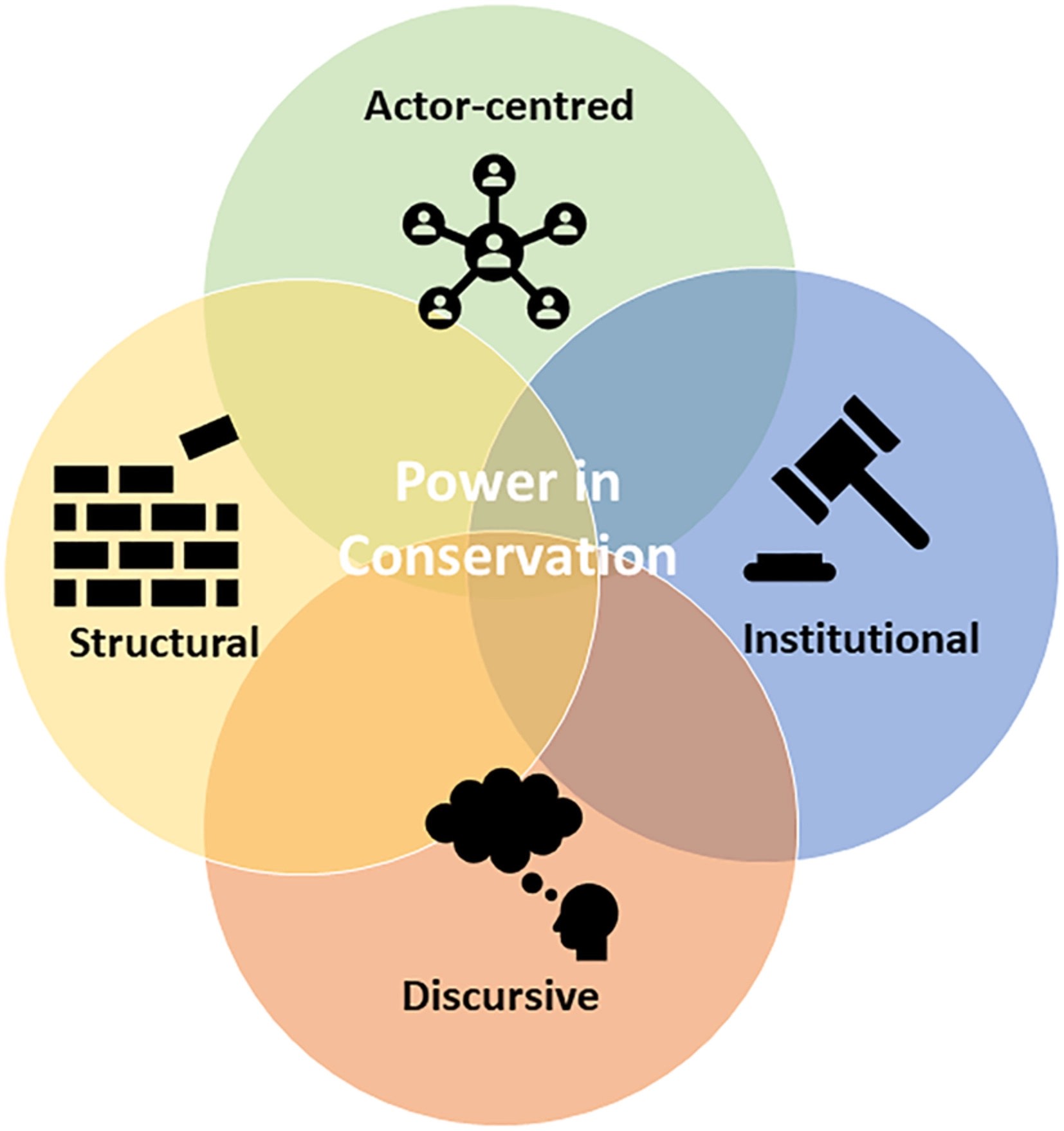
February 8, 2023Power (to decide, implement, resist, inform, convince, …) is needed for good environmental management and nature conservation. It is often contested. Power is also sometimes hard to grasp – it can be held by certain people, by rules, by institutions, by ideas, or even by discourses. This new paper, fruit of a workshop organised by Ross Shackleton here at the University of Lausanne and fruitful exchanges between the co-authors, tries to clarify questions of power and proposes six guiding principles approaching power in conservation research and practice.
Leave a Comment » | Conservation, Political ecology, Uncategorized | Tagged: nature conservation, political ecology, power | Permalink
Posted by christiankull
New project: what type of fire regime for what type of benefit (carbon, biodiversity, livelihoods…) in Southern Africa and Madagascar
October 13, 2022
I am happy to announce that we have received funding from SNIS (Swiss Network for International Studies) for a new project. Principal member of the project is fire ecologist and remote sensing specialist Víctor Fernández-García (see also Victor’s blog site), with collaborators at the universities of Antananarivo, Eduardo Mondlane, Swansea, Lausanne, and Léon, and at FAO and SANParks.
Read the rest of this entry »
1 Comment | Conservation, Fire, Madagascar, Research | Tagged: fire regime, Kruger National Park, Madagascar grasslands, remote sensing | Permalink
Posted by christiankull
Voices from the forest – local people and conservation in Madagascar
December 21, 2021Congratulations to the team from the “Forest4Climate&People” project at ESSA-Forêts (University of Antananarivo) and the School of Natural Sciences (Bangor University) for this fantastic short film. It is both beautifully done and really informative. Wonderful images as well as guitar picking by D’Gary. And most of all, it has a strong and clear message, contained in the subtitle, that advocates “putting local people at the heart of decisions about tropical forest’s contribution to tackling climate change”.
English version embedded above; voici le lien pour la version française: https://youtu.be/X0S0Y1h4NoE
Leave a Comment » | Conservation, Development, Madagascar, Political ecology | Tagged: Madagascar, political ecology | Permalink
Posted by christiankull

 Christian Kull