I am recruiting a doctoral student to work with me as a graduate assistant in the Development, Societies, and Environments group at the Institute of Geography and Sustainability at the Université de Lausanne next year. Read the rest of this entry »
PhD scholarship in political ecology
February 3, 2020
 Leave a Comment » |
  Doctoral students, Political ecology, Research, Teaching | Tagged: bourse d'étude, doctoral studies, political ecology, research assistantship, scholarship |
  Permalink
 Posted by christiankull
Photo essay on forest change in central Vietnam
December 6, 2019I’m happy to announce that the Swiss Programme for Research on Global Issues for Development (r4d) has published my photo essay regarding our work in the mountains of Thừa Thiên-Huế province in central Vietnam. You can see it here:
Navigating Forest Changes in Central Vietnam
Leave a Comment » | Acacia, Conservation, Development, Political ecology, Research, Uncategorized, Vietnam | Permalink
Posted by christiankull
Statistics to open your eyes: our biomass on this planet
November 1, 2019Here are some numbers that put into perspective the human dominance of the planet: people and domesticated livestock account for 96 percent of the biomass of all mammals on the planet. In other words, if you weighed up all the mammals of the planet on a giant scale, wild mammals (including those very heavy whales and elephants) are only 4 percent of the total. Yikes! The same holds true for birds. The biomass of all the chicken in the world is about three times higher than that of wild birds. What if conservation measures that put their goals in terms of land area (like Madagascar’s Durban Vision of 10% in protected areas, or E. O. Wilson’s Half-Earth) switched to a biomass goal instead?
Read the rest of this entry »
3 Comments | Conservation, Statistic to open your eyes | Permalink
Posted by christiankull
The political ecology of the Ganges River (PhD Flore Lafaye de Micheaux)
September 17, 2019I’m proud to announce the successful public thesis defence of Dr. Flore Lafaye de Micheaux, the first of my Lausanne doctoral students to finish. The issue that guides and motivates Flore’s thesis is a shift in how the Indian government approached the environmental governance of the Ganges River, notably the Namami Ganga program of prime minister Narendra Modi. From a need to clean a polluted river, the problem became one of saving a landscape, a deity, and the nation.
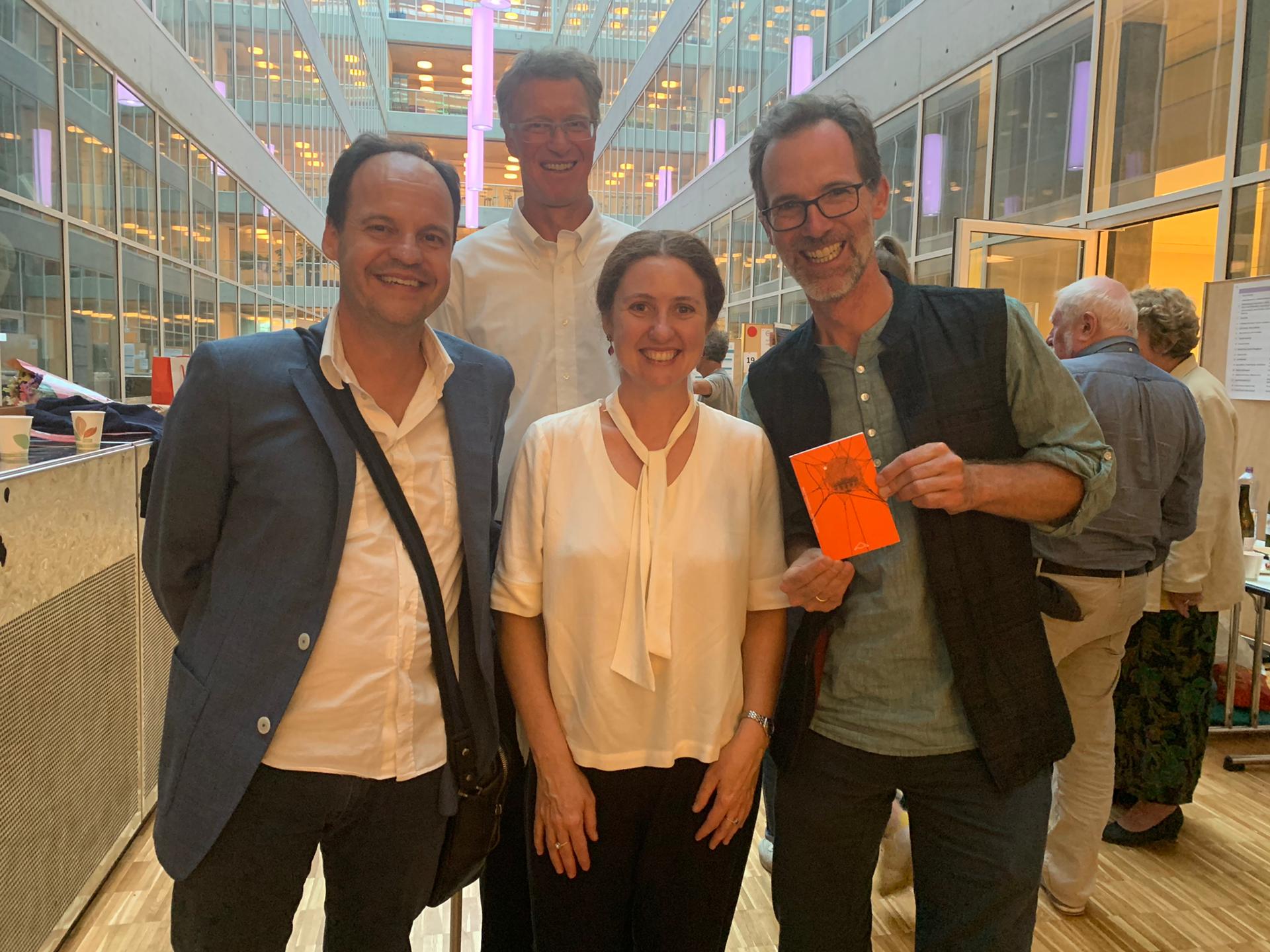
Flore celebrates with her thesis jury: René Véron (internal expert), Torsten Venneman (chair), and myself (supervisor). External experts Priya Rangan (Melbourne) and Jamie Linton (Limoges) participated in the private defence earlier.
1 Comment | Doctoral students, Uncategorized | Tagged: Ganges, PhD students, political ecology | Permalink
Posted by christiankull
Les feux en Amazonie et ailleurs
September 2, 2019The recent media storm over Amazonian flames recently caught up with me – here’s the result, in French, published in La Liberté (Fribourg), Le Nouvelliste (Sion), and Le Courrier (Genève), and in pdf. I laud the journalist Thierry Jacolet for his efforts to understand and not just populate preconceived soundbites with academic authority. Read the rest of this entry »
Leave a Comment » | Fire | Tagged: Africa, Brazil, deforestation, grassland, wildfire | Permalink
Posted by christiankull
Statistic to open your eyes: 240 generations of agriculture
July 17, 2019My summer reading has been James C. Scott’s new book, Against the Grain: A Deep History of the Earliest States. In it, I discovered this tasty morcel to open your eyes: “only 240 human generations have elapsed since the first adoption of agriculture and perhaps no more than 160 generations since it became widespread”.
Read the rest of this entry »
1 Comment | Statistic to open your eyes | Permalink
Posted by christiankull
Forest livelihood transformations: from wartime ‘A Shau valley’ to today’s A Lưới district
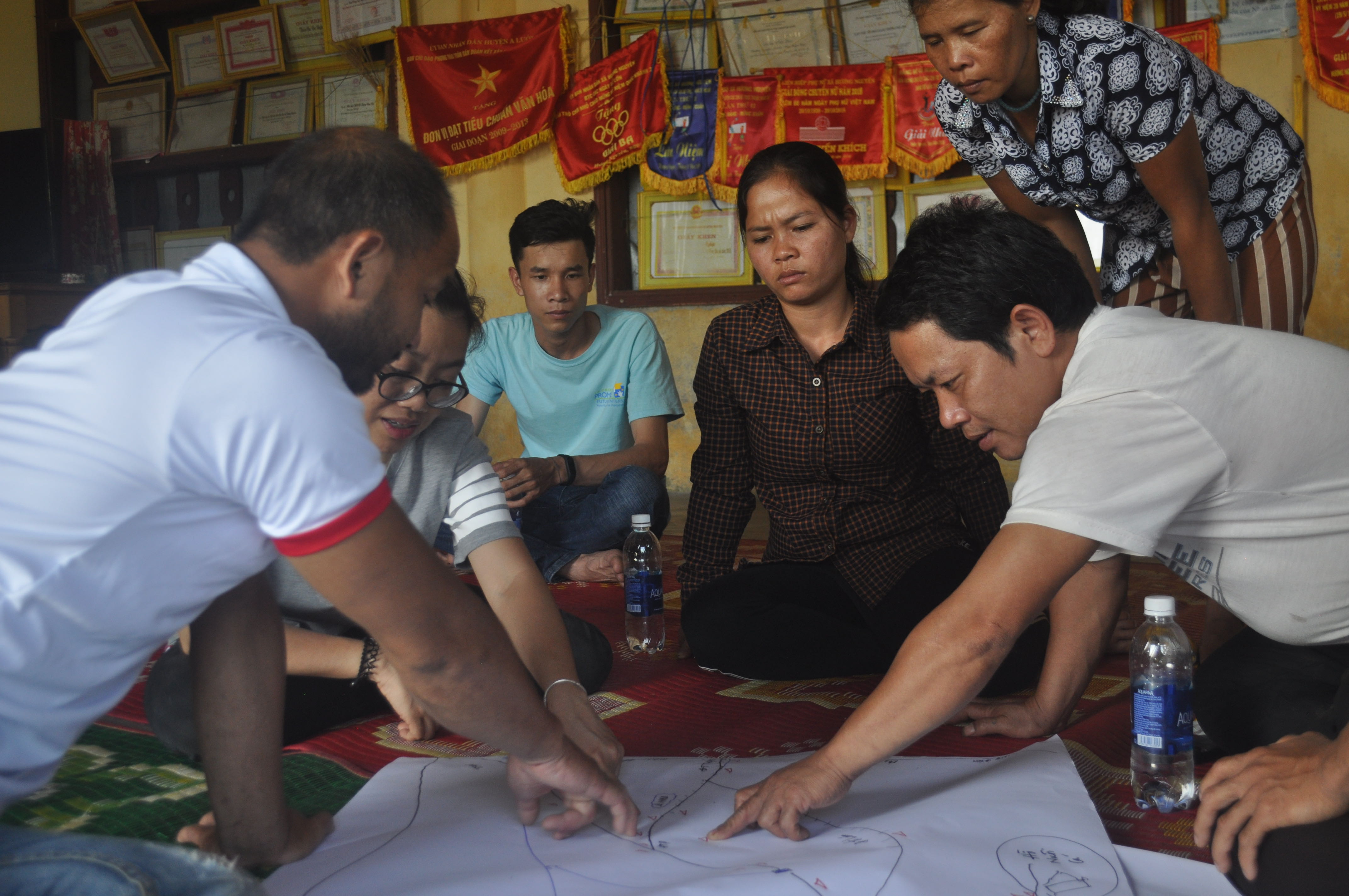
May 1, 2019A few weeks ago I had the pleasure of joining PhD student Nguyen Thi Hai Van in her field sites in the upland A Lưới district of Thừa Thiên-Huế province, central Vietnam. She introduced me to her key informants, took me around the fields and woodlots, and translated as she conducted a number of focus group sessions. Of the many interesting ideas and observations that emerged, the overall theme was certainly one of the dramatic and rapid changes affecting the peoples’ livelihoods and landscapes.
Leave a Comment » | Acacia, Environmental History, Political ecology, Research, Vietnam | Tagged: forest transition | Permalink
Posted by christiankull
The social and human dimensions of invasive species
December 5, 2018Announcing a special issue on the human and social dimensions of invasive species masterfully coordinated by Ross Shackleton, who came to Lausanne as a post-doctoral scholar funded by the Swiss Government’s Excellence Scholarship, and has prolonged his stay with a lecturer contract. The special issue, published in the Journal of Environmental Management, includes three review papers and thirteen case studies – see the Table of Contents below. In our editorial paper, we review advances in the four main ways people interact with invasive species:
- causing or facilitating invasions
- thinking and feeling about invasions
- being affected by invasions, for better or for worse
- getting together to manage invasions
Leave a Comment » | Introduced and Invasive Plants, Research, Uncategorized | Tagged: human dimensions, invasive species | Permalink
Posted by christiankull
Joint UNIL/U.Antananarivo field trip to Ambositra
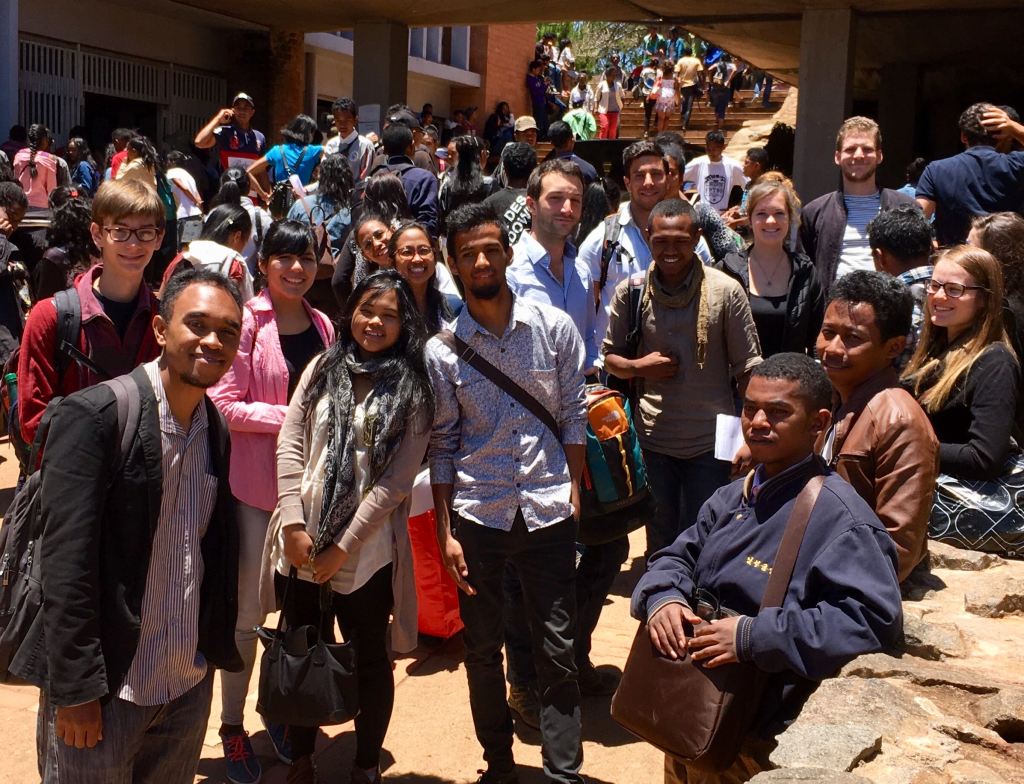
October 30, 2018As part of the University of Lausanne Masters in Geography (orientation Development and environment), we recently organized a very successful ten-day “field school” in conjunction with the University of Antananarivo. The Swiss and Malagasy students focused on issues of poverty, development, and sustainable farming in the highlands of Madagascar.
1 Comment | Madagascar, Teaching | Permalink
Posted by christiankull
Middle-range theories of land system change
September 14, 2018
Patrick leading the reflections
New paper in Global Environmental Change, under the amazing leadership of Patrick Meyfroidt, bringing together and surveying a wide family of theories of land use and land cover change.
Leave a Comment » | Interdisciplinarity, Research, Sustainability | Permalink
Posted by christiankull
 Christian Kull