Stopping and reversing deforestation is a foremost priority in much of the tropics. Numerous policies and programs try to stem forest clearance, encourage tree planting, and restore forest landscapes. The hope is to promote “forest transitions” similar to the historical turnaround in forest cover trajectories in wealthy temperate countries. Such efforts have become all the more urgent given the climate and biodiversity crises. Yet it is often assumed that more forests is better and more sustainable, without careful consideration of how and where it happens, who wins and who loses, and what kinds of forests. In a recent open access paper, we identify nine pitfalls to such assumptions. Hopefully this inspires researchers, policymakers, and leaders to promote more diverse transitions to sustainable forest use and management.
The nine pitfalls and their implications for research and policy. (Figure 2 from our paper in the journal Environmental Conservation). With photos of forest landscapes across Southeast Asia: (a) plantations of rubber and acacia spreading in central Vietnam with remnant natural forest on hilltops; (b) ancestral lands of Pala’wan farmers on Palawan, Philippines; (c) announcement of an application for a communal land title for heritage land that has already been converted to oil palm plantations in Sabah, Malaysia; and (d) paddy rice fields and upland forest with swidden in Hsipaw, Myanmar. Photos (a) Tran Nam Thang, (b) Wolfram Dressler, (c) Jennifer Bartmess, (d) Kevin Woods.Read the rest of this entry »
The “FTViet” project, which investigated the nature of forest transitions in central Vietnam through research, capacity building, and policy making is in its last year. Here’s a relaxing 15 minute video produced by our wonderful partners at the NGO Corenarm summarising the project. It gives a nice sense of the landscapes and people involved (Subtitles in English).
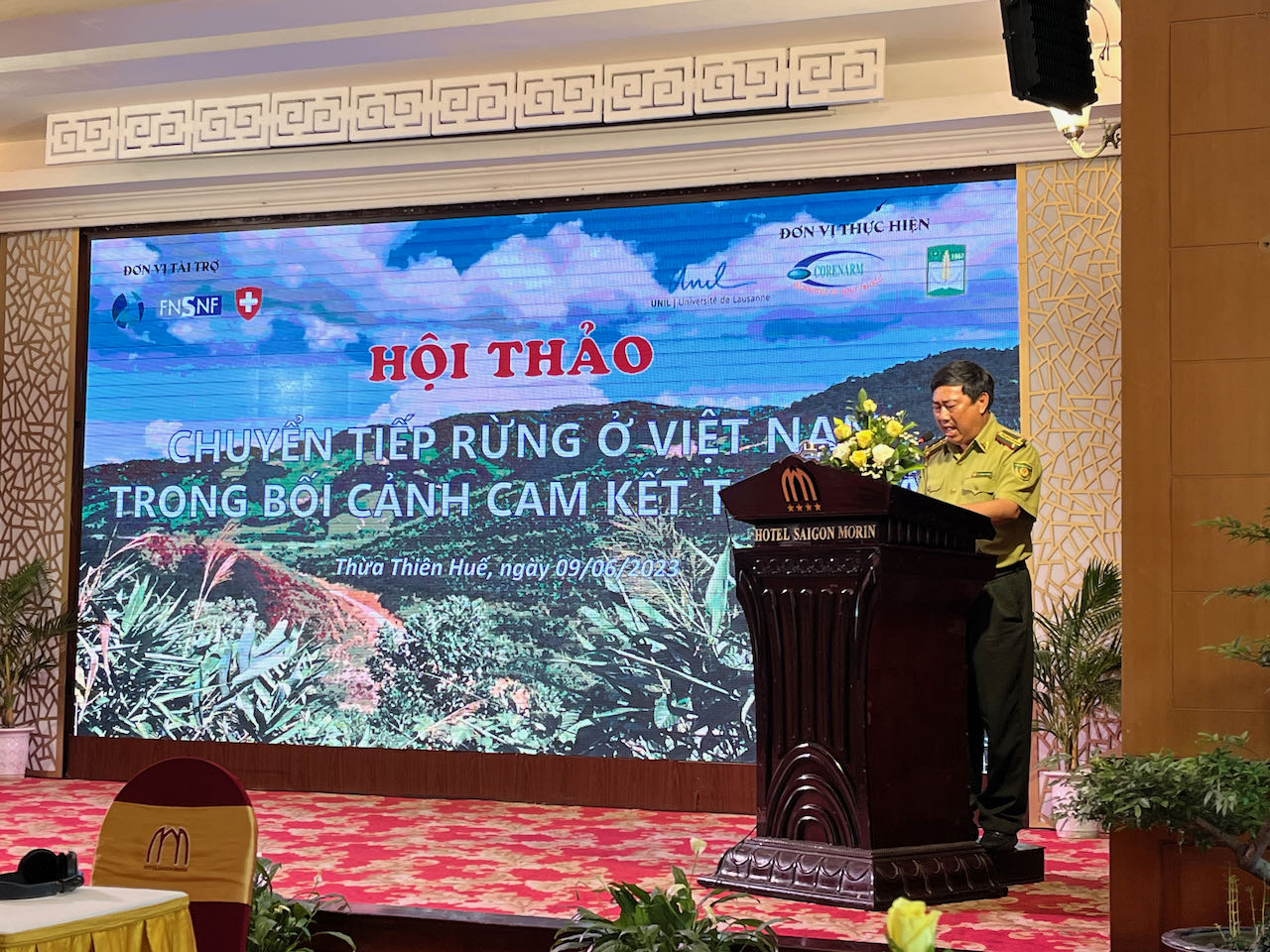
Visiting a community-managed forest in upland A Luoi districtThe head of the provincial forest service opens the workshop
Our FT Viet project recently held a science-policy workshop on forest change and sustainability. After over five years of project activities, it was a chance to report on project outcomes and bring together key actors to reflect on the trends, direction, and sustainability of forest management in Vietnam. The 40+ people assembled in a hotel conference room in Hue on June 9 included people working at the national level in Hanoi, others from Thua Thien Hue and nearby provinces in the north Central region, and local stakeholders. There were university researchers and leaders, officials from the national payments for ecosystem services program, conservationists, leaders of forest certification programs, NGOs, and, of course, state foresters in their green uniforms.
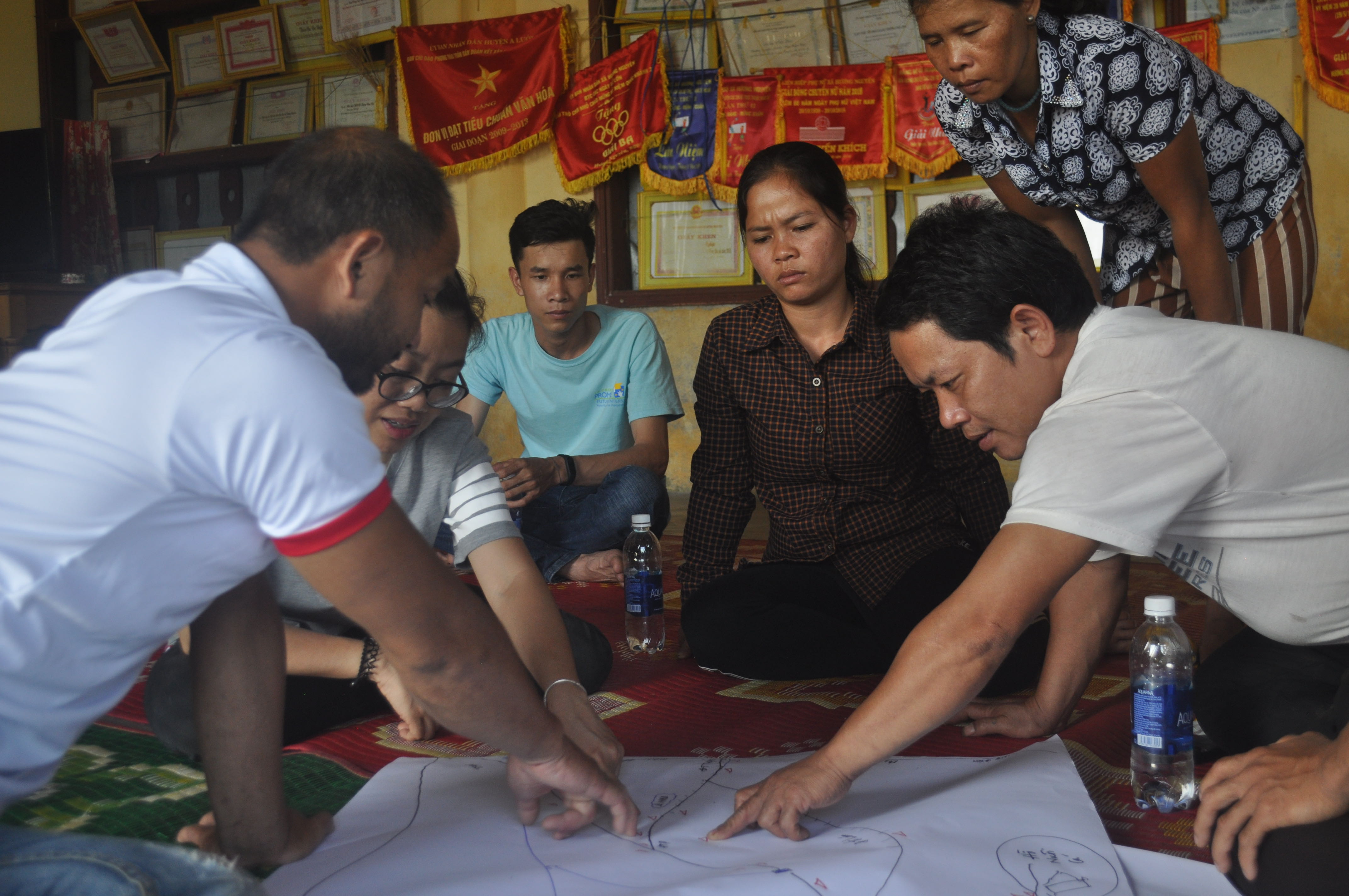
A few weeks ago I had the pleasure of joining PhD student Nguyen Thi Hai Van in her field sites in the upland A Lưới district of Thừa Thiên-Huế province, central Vietnam. She introduced me to her key informants, took me around the fields and woodlots, and translated as she conducted a number of focus group sessions. Of the many interesting ideas and observations that emerged, the overall theme was certainly one of the dramatic and rapid changes affecting the peoples’ livelihoods and landscapes.
Unrecognizable 20 years ago: Acacia plantations and new road in Nam Đông district, Thừa Thiên-Huế province.
The past week marked the launch of our new, Swiss government funded research project on the “forest transition” in Vietnam, which I’m leading in collaboration with colleagues Trần Nam Thắng and Ngô Trí Dũng of Huế University and Roland Cochard at Unil (see previous blog). The project aims to promote sustainable forest management and resilient rural livelihoods in the rapidly changing forest landscapes of this region.
In what situations do the practices of small-scale family farmers lead to increased tree cover, particularly on a continent better known for land degradation and deforestation? Research on the “forest transition”, a pattern where net deforestation is replaced by a net gain in forest cover, has so far avoided much mention of Africa. In contrast, it is historically documented in western Europe, eastern North America, east Asia, and seemingly underway in parts of Latin America and Southeast Asia. This research tends to focus on factors such as economic modernisation, rural abandonment, urbanisation, or even globalisation as driving forces of the forest transition. Two recent studies I contributed to focus instead on Africa – one in West Africa, one in Madagascar – and on transitions brought about by rural farmers. Read the rest of this entry »


 Posted by christiankull


 Christian Kull