I am recruiting a doctoral student to work with me as a graduate assistant in the Development, Societies, and Environments group at the Institute of Geography and Sustainability at the Université de Lausanne next year. Read the rest of this entry »
PhD scholarship in political ecology
February 3, 2020
 Leave a Comment » |
  Doctoral students, Political ecology, Research, Teaching | Tagged: bourse d'étude, doctoral studies, political ecology, research assistantship, scholarship |
  Permalink
 Posted by christiankull
Photo essay on forest change in central Vietnam
December 6, 2019I’m happy to announce that the Swiss Programme for Research on Global Issues for Development (r4d) has published my photo essay regarding our work in the mountains of Thừa Thiên-Huế province in central Vietnam. You can see it here:
Navigating Forest Changes in Central Vietnam
Leave a Comment » | Acacia, Conservation, Development, Political ecology, Research, Uncategorized, Vietnam | Permalink
Posted by christiankull
Forest livelihood transformations: from wartime ‘A Shau valley’ to today’s A Lưới district
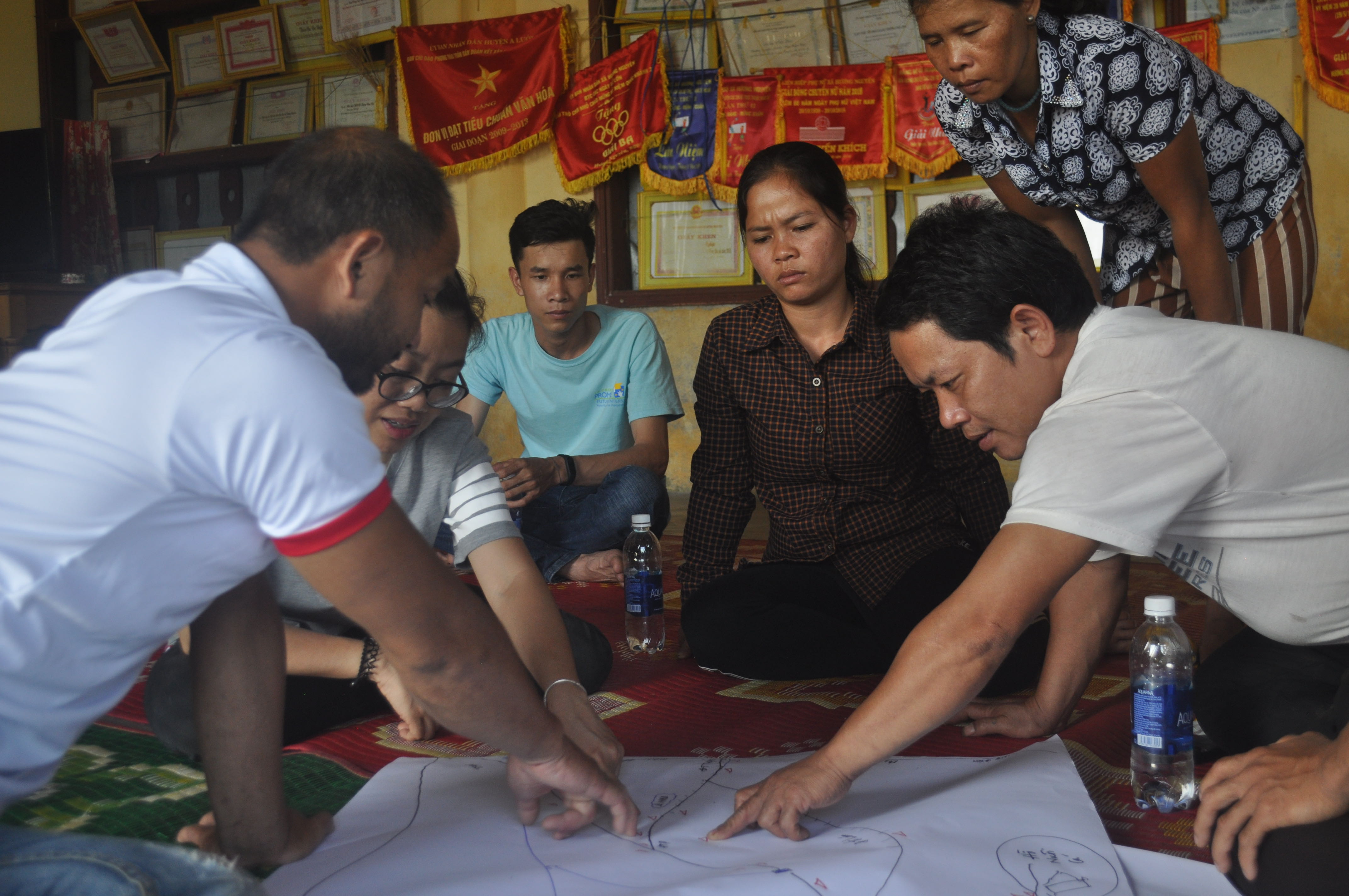
May 1, 2019A few weeks ago I had the pleasure of joining PhD student Nguyen Thi Hai Van in her field sites in the upland A Lưới district of Thừa Thiên-Huế province, central Vietnam. She introduced me to her key informants, took me around the fields and woodlots, and translated as she conducted a number of focus group sessions. Of the many interesting ideas and observations that emerged, the overall theme was certainly one of the dramatic and rapid changes affecting the peoples’ livelihoods and landscapes.
Leave a Comment » | Acacia, Environmental History, Political ecology, Research, Vietnam | Tagged: forest transition | Permalink
Posted by christiankull
Towards a “critical” invasion science
June 11, 2018The study of invasive plants and animals might be seen as the domain of biology and environmental managers. But in a recent piece I argue for a “critical” approach due to the deeply social nature of invasion landscapes, the power relations affecting the science of invasions, and the differential impacts of weed or pest control on lives and landscapes. By “critical” invasion science, I mean research that is informed by social theories, with a sensibility to questions of social justice and to the social construction of scientific knowledge. The piece investigates several aspects of invasion science ripe for critical analysis: the history of the science (to understand what the science is doing and why), the terminology and categories of analysis, and the highly contested social, political, and ethical context within which invasion management takes place. The piece conclude with four proposals for further work in critical invasion science and examples of the types of questions it might ask. Read the rest of this entry »
Leave a Comment » | Introduced and Invasive Plants, Political ecology, Research | Tagged: biological invasions, critical physical geography, invasion science, political ecology | Permalink
Posted by christiankull
Governance of forests, food commodities, and rivers: introducing my current doctoral team
May 25, 2018I’d like to introduce my current doctoral team, who are a great pleasure to work with. Their research interests have coalesced around the political ecology of environmental governance, specifically of forests, commodities, and rivers. In other words, who decides, who wins, who loses, and why, when decisions are made about trees, water, fish, cocoa, and sheep? What ideas are decisions based on, and how does the materiality of the object shape the outcomes? Here are some brief words on the team and their interests, grouped by three general themes: Read the rest of this entry »
Leave a Comment » | Doctoral students, Political ecology, Research, Teaching | Tagged: development studies, human geography, PhD students, political ecology | Permalink
Posted by christiankull
What are the environmental humanities?
March 10, 2017Among the most pot ent recent academic buzzwords must figure “The Environmental Humanities”. This bandwagon is clearly attractive: an ever-growing bouquet of new journals, positions, institutes, books, and networks carries this label.[*]
In this blog, I’d like to propose an alternative definition for what the environmental humanities constitute, one that goes a little bit against the standard definition. In short, instead of emphasising meta-discipline, interdisciplinarity, and knowledge domains, my definition emphasises modes of knowledge creation and communication. Let me explain.
The environmental humanities emerged in particular out of history and literature departments (environmental history, eco-criticism), with a number of other contributors from across a diverse spectrum of academia (Nye et al. 2013). Well-known figures like Henry David Thoreau and Aldo Leopold are claimed as predecessors. Definitions of the environmental humanities, in my (perhaps naïve) reading, seem to coalesce around three points: Read the rest of this entry »
4 Comments | Book Review, Environmental History, Interdisciplinarity, Political ecology, Sustainability | Tagged: ecological humanities, environmental humanities | Permalink
Posted by christiankull
Political ecology and resilience: competing ‘interdisciplines’
February 10, 2017The study of environment-society interactions is widely acknowledged to demand inter-disciplinary knowledge production. Yet there are multiple ways of being interdisciplinary. Both “political ecology” and “resilience” (or socio-ecological systems) are research approaches that explicitly claim to be inter- or even post-disciplinary. Read the rest of this entry »
1 Comment | Interdisciplinarity, Political ecology | Tagged: political ecology, Resilience | Permalink
Posted by christiankull
Hervé Rakoto and the farmers of highland Madagascar
February 8, 2017The tantsaha, or farmers, of highland Madagascar lost one of their mo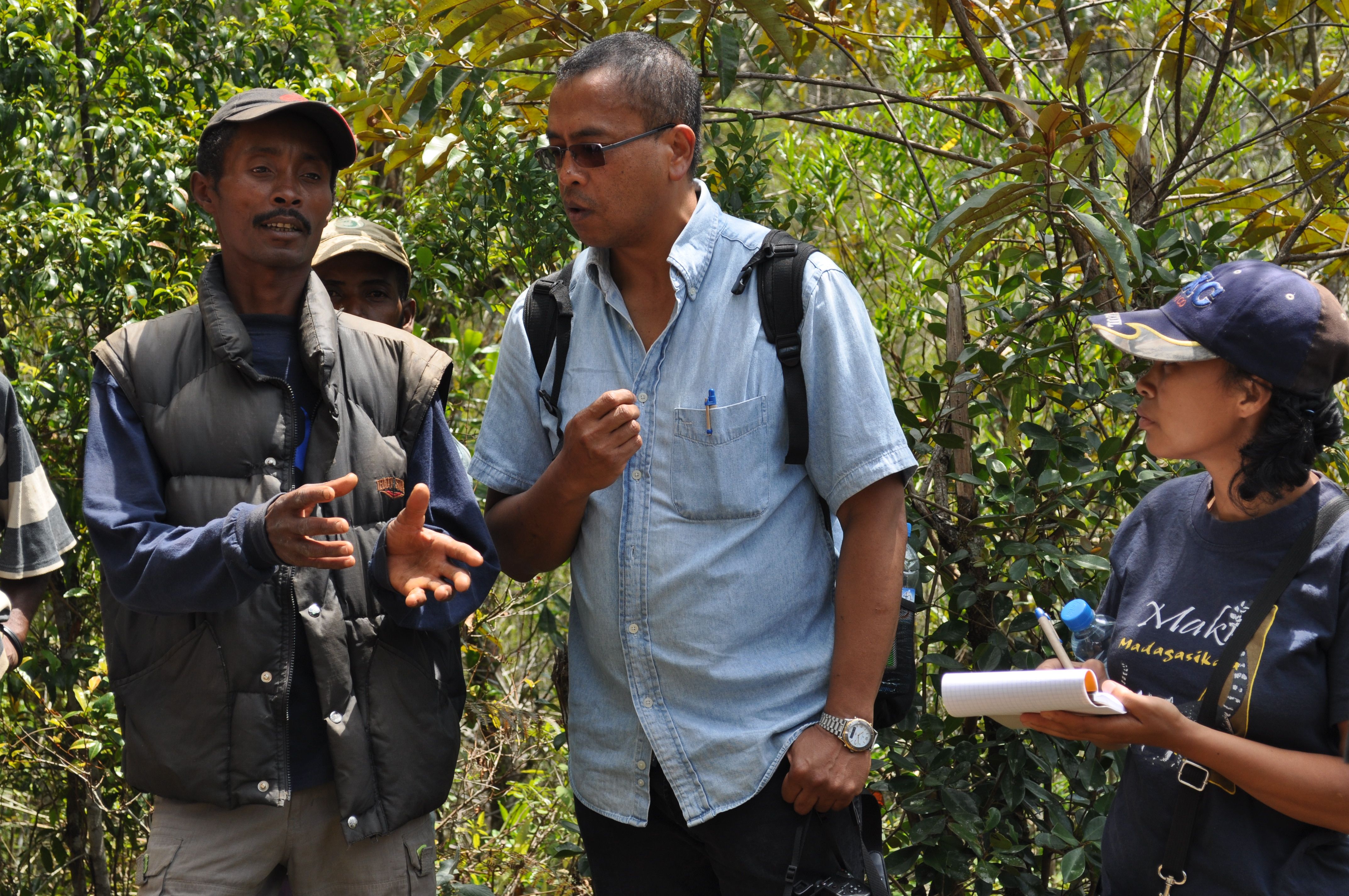 st empathetic interlocutors in late 2015: the geographer Hervé Rakoto Ramiarantsoa. In his books and articles, Hervé investigated the lives and landscapes of rural Imerina, Betsileo, and Tanala country from the farmer’s perspectives. His wonder and respect for the farmer’s techniques, their intricate reworkings of canals, soils, and paddy fields, was as strong as a farmer’s polished wood angady spade. Read the rest of this entry »
2 Comments | Book Review, Development, Madagascar, Political ecology, Smallholder farming | Permalink
Posted by christiankull
Manifest for an environmental geography (in France)
May 20, 2016
In September 2010, fifteen prominent senior French geographers, under the auspices of the Société de Géographie, held a one-day colloquium entitled Le ciel ne va pas nous tomber sur la tête (The sky will not fall on our heads). The participants critiqued the “prevailing obfuscation, radical environmentalism, de-growth, denial of science, and faith in humanity”[1]. While many geographers can sympathise with critiques of simplified or overly catastrophic environmental narratives, as well as with critiques of bad science, this book went much further. It verged on climate change denial and was underlain by the assumption that we need no changes to our lifestyles.[2] In direct response, two younger geographers named Denis Chartier and Estienne Rodary organized a conference entitled Géographie, Écologie, Politique: un climat de changement at the Université d’Orléans in September 2012 (see my blog entry at the time). Participants in Orléans expressed frustration with what they saw as the dominant school, the old guard. This conference also led to an edited volume, titled Manifeste pour une géographie environnementale, finally published a few months ago – the reason for this blog entry.
1 Comment | Political ecology, Research, Sustainability | Permalink
Posted by christiankull
Notes from a political ecology conference in Stockholm
March 27, 2016 I’m on the flight home reflecting on the ENTITLE “Undisciplined Environments” conference, a gathering of 500 (!) people, mostly academics, but also activists and artists, under the banner of political ecology. What is this ‘political ecology’ that brought so many people to Stockholm? Does it mean the same thing as when Land Degradation and Society was written some 30 years ago, a spirit of disciplinary crossing and plural epistemologies but rooted in a cross fertilization of cultural ecology and Marxist political economy? What I found was an open collective of intellectuals engaged in red-green issues of social justice and environment and keen to use social theory. Read the rest of this entry »
1 Comment | conference, Political ecology | Tagged: political ecology | Permalink
Posted by christiankull

 Christian Kull